2301 Technology Drive, O’Fallon, MO 63368


A flash of tiny white fangs during a big yawn is adorable, but have you ever stopped to think about what’s happening inside your cat’s mouth? Dental disease is one of the most common health issues in cats, affecting the vast majority of felines over the age of three. The good news is that you can make a significant difference right from your living room.
Establishing an easy home teeth cleaning routine for cats protects your furry friend from painful gum disease, tooth loss, and even serious organ damage caused by oral bacteria. This guide will walk you through simple, stress-free steps to keep your cat’s smile sparkling and healthy.
Why Your Cat’s Dental Health Matters So Much
Many cat owners overlook dental care, assuming their pet’s teeth will take care of themselves. Unfortunately, that’s far from the truth. Understanding the risks is the first step toward prevention.
The Hidden Dangers of Feline Dental Disease
When plaque and tartar build up on your cat’s teeth, they create a breeding ground for harmful bacteria. This leads to gingivitis, which causes red, swollen, and painful gums. If left untreated, it progresses to periodontal disease.
This advanced stage can result in:
- Chronic oral pain and difficulty eating
- Tooth resorption and eventual tooth loss
- Bad breath (halitosis)
- Bacteria entering the bloodstream, potentially affecting the heart, liver, and kidneys
Taking proactive steps at home can significantly slow down or even prevent these painful conditions.
Signs Your Cat May Have a Dental Problem
Cats are masters at hiding pain, so you need to be a keen observer. Watch for these subtle warning signs that something may be wrong:
- Unusually bad breath
- Drooling or pawing at the mouth
- Reluctance to eat or dropping food
- Red, bleeding, or receding gums
- Visible yellow or brown tartar on teeth
- Changes in behavior, like increased irritability
If you notice any of these symptoms, it’s time to consult a professional for a thorough oral examination.
Getting Started: Preparing Your Cat for Teeth Cleaning
You can’t just dive in with a toothbrush on day one. Patience and positive association are your best tools for success. This gradual approach will make the process much easier for both of you.
Step 1: Gather Your Supplies
First, make sure you have the right equipment. Never use human toothpaste, as ingredients like fluoride and xylitol are toxic to cats.
You will need:
- Cat-specific toothpaste: These come in flavors like poultry or fish that cats find appealing.
- A cat toothbrush: Choose a small, soft-bristled brush or a convenient finger brush.
- Dental treats or rewards: Use these for positive reinforcement after each session.
Step 2: Create Positive Associations
Before any brushing happens, get your cat comfortable with you touching their face and mouth. During calm moments, gently lift their lip and touch their gums.
Reward them with a treat and praise. Repeat this daily for a week or two until your cat is completely relaxed with the handling.
Step 3: Introduce the Toothpaste
Let your cat lick a small amount of the pet-safe toothpaste from your finger. This allows them to get used to the taste and texture. Most cats enjoy the flavor, which turns the toothpaste into a reward in itself.
For expert dental care concerns, consulting a pet dentist in O’Fallon can provide personalized guidance for your cat’s unique needs.
The Simple Step-by-Step Brushing Routine
Once your cat is comfortable with the taste and touch, you can begin the actual brushing. Keep sessions short and positive to build a lasting habit.
How to Brush Your Cat’s Teeth Effectively
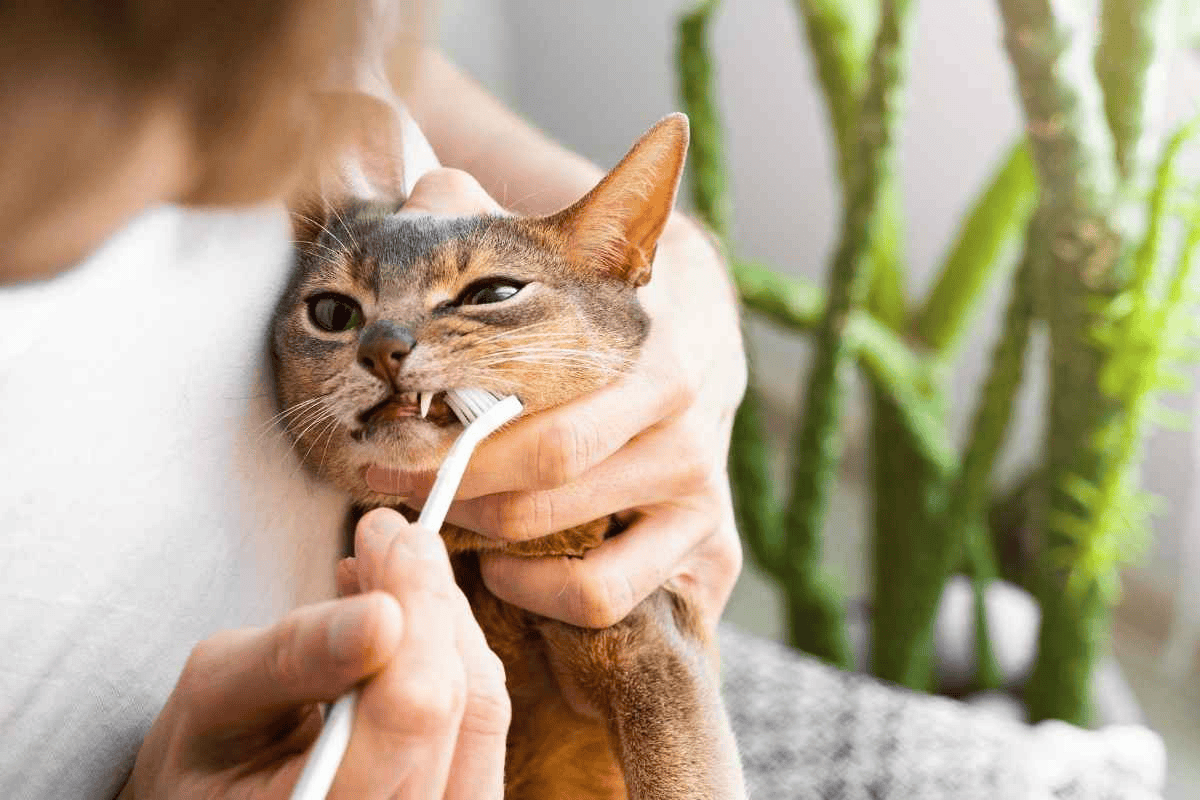
Follow these steps for a stress-free brushing session:
- Choose a calm time: Pick a moment when your cat is relaxed, perhaps after a play session or a nap.
- Position your cat comfortably: Have them sit on your lap or a stable surface. You can gently wrap them in a towel if they tend to squirm.
- Apply a small amount of toothpaste: A pea-sized amount on the brush is plenty.
- Gently lift the lip: Focus on the outer surfaces of the teeth, as that’s where tartar accumulates most.
- Brush in small circles: Use gentle pressure along the gum line. Aim for about 30 seconds per side.
- End with praise and a treat: Always finish on a positive note to keep the experience pleasant.
Aim for daily brushing, but even two to three times a week can make a substantial difference in preventing plaque buildup.
Alternatives and Additions to Brushing
Not every cat will tolerate a toothbrush, no matter how patient you are. Fortunately, there are helpful alternatives that can supplement or support your dental care efforts.
Dental Treats and Chews
Look for treats with the Veterinary Oral Health Council (VOHC) seal of approval. These products are proven to help reduce plaque and tartar through their abrasive texture or special ingredients.
Water Additives and Dental Gels
Flavorless water additives can help control bacteria in your cat’s mouth. Dental gels can be applied directly to the gums and work without any brushing required.
Dental Diets
Some prescription cat foods are specifically formulated to clean teeth. The kibble is designed to scrub the tooth surface as your cat chews.
Finding trusted local veterinary support is essential for your cat’s long-term health.
Frequently Asked Questions
Q1: How often should I brush my cat’s teeth at home?
Ans: Ideally, you should brush your cat’s teeth daily. However, brushing even two to three times per week provides significant benefits in reducing plaque and preventing gum disease.
Q2: Can I use human toothpaste for my cat?
Ans: No, never use human toothpaste. It contains ingredients like fluoride and xylitol that are toxic to cats. Always use a toothpaste specifically formulated for pets.
Q3: My cat absolutely refuses to let me brush. What can I do?
Ans: If brushing is impossible, use alternatives like VOHC-approved dental treats, water additives, or dental gels. Consult your vet for recommendations tailored to your cat’s temperament.
Q4: At what age should I start a dental routine for my kitten?
Ans: Start as early as possible! Getting a kitten accustomed to mouth handling and brushing from a young age makes the process much easier throughout their life.
Q5: Are dental treats alone enough to keep my cat’s teeth clean?
Ans: Dental treats are a helpful supplement, but they are not a complete substitute for brushing or professional cleanings. A combined approach offers the best protection against feline dental disease.
Q6: How can I tell if my cat has a toothache?
Ans: Cats hide pain well, but signs include bad breath, drooling, eating on one side of the mouth, dropping food, facial swelling, and a reluctance to be touched near the head.