
2301 Technology Drive, O’Fallon, MO 63368

Comprehensive Dental Services for Pets
Proper dental care is vital for your cat or dog's overall health and well-being. If you're looking for an animal hospital that provides specialized dental care for dogs and cats, our veterinary team is dedicated to offering expert services. We focus on maintaining the health of your pet’s teeth and gums, ensuring they receive the best care possible.
Cat and Dog Dental Care: Why It Matters
Dental issues like plaque buildup, tartar, and gum disease can impact your pet’s oral health, leading to problems such as bad breath, discomfort, and tooth loss. However, the effects of poor dental care go beyond just oral health. Dental disease can allow bacteria to enter the bloodstream, potentially harming vital organs and causing serious health complications.
In addition to physical health risks, dental problems can also affect your pet’s behavior. Pain from dental issues may cause irritability or a decrease in activity levels, leading them to withdraw from play and social interaction, which can affect their emotional well-being. Early detection and treatment of dental problems are crucial to prevent these issues and ensure your pet enjoys a healthy, happy life.
Signs of Dental Disease in Dogs and Cats
Our pets can't tell us when they're experiencing dental discomfort, so it's important for pet owners to be on the lookout for signs of dental issues. Some common indicators include:
- Persistent bad breath
- Difficulty eating
- Excessive drooling
- Pawing at the mouth
- Swollen or inflamed gums
- Changes in chewing habits, such as favoring one side of the mouth
- Sudden preference for soft food over hard kibble
- Bleeding from the mouth
If you notice any of these symptoms, it’s essential to schedule a dental examination with us as soon as possible. Regular oral check-ups are crucial for detecting dental issues early and ensuring your pet’s oral health.
Cat and Dog Dental Cleaning
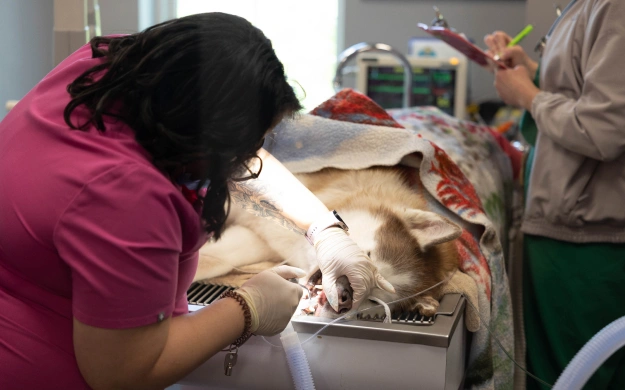
A professional pet dental cleaning is a thorough procedure that involves an examination and cleaning of your pet's teeth and gums. To ensure safety and comfort, the procedure is performed under general anesthesia. Here’s what you can expect during the process:
- Pre-Anesthetic Bloodwork: Before administering anesthesia, we perform bloodwork to assess your pet's overall health. This is important, as underlying conditions can affect anesthesia safety.
- Anesthesia: Once cleared for anesthesia, your pet will receive a sedative to help them relax. An intravenous catheter is inserted, followed by the administration of anesthesia to induce unconsciousness.
- Examination and Cleaning: While your pet is under anesthesia, we conduct a thorough examination of their mouth, teeth, and gums. We remove plaque and tartar from both above and below the gum line using specialized tools, and then polish the teeth to create a smooth surface that helps prevent plaque buildup.
- Radiographs: As part of the cleaning, we take dental X-rays to look below the gum line. These radiographs help us find hidden issues like tooth root infections, bone loss, or abscesses that cannot be seen during a visual exam.
- Extractions: If necessary, any damaged or infected teeth will be extracted to prevent further pain and infection. Additional procedures, such as cavity sealing or fluoride application, may be performed to strengthen the teeth.
- Recovery: After the dental cleaning, your pet will be carefully monitored as they recover. Once they’re fully awake and alert, they’ll be discharged to go home with you.
The Role of Anesthesia in Cat and Dog Dental Cleanings
Some pet owners may feel hesitant about anesthesia for their pet’s dental cleaning, but it is crucial for ensuring a safe and effective procedure. Here's why anesthesia is essential:
- Safety and Comfort: Anesthesia ensures that your pet remains unconscious throughout the procedure, preventing any pain or discomfort. This allows us to perform a thorough cleaning without causing stress or anxiety for your pet.
- Proper Examination and Cleaning: Pets cannot stay still or cooperate during a dental cleaning without anesthesia, making it challenging to conduct a detailed examination and cleaning. Anesthesia enables us to properly assess and clean your pet's teeth and gums without interruption or risk of injury.
It's important to note that modern anesthesia is very safe and carries minimal risks when administered by our skilled veterinarians in O’Fallon. The benefits of maintaining a clean and healthy mouth significantly outweigh the potential risks associated with anesthesia.
If you have concerns about anesthesia for your pet, please feel free to discuss them with our veterinarians. We are happy to address any questions and determine the best approach for your pet's health and comfort.
The Role of Pet Dental X-rays
Dental X-rays, also known as dental radiographs, are an imaging technique that helps our O’Fallon veterinarians view the internal structures of your pet’s mouth, including the jaw, tooth roots, and oral cavity bones. These images are essential for conducting a thorough dental examination and are vital for identifying problems that may not be visible during a routine examination.
When Are Pet Dental X-rays Necessary?
Dental X-rays may be recommended for your pet during routine dental checkups or when symptoms such as bad breath, difficulty eating, or visible tartar buildup are present. They are also critical before dental procedures, such as tooth extractions, or when there’s concern about underlying conditions affecting your pet's oral and overall health.
How to Keep Your Cat and Dog’s Teeth Clean at Home
While professional dental cleanings are essential, much of your pet's dental care can be maintained at home. Here are some tips to help you keep your cat and dog’s teeth healthy between veterinary visits:
- Daily Brushing: Brush your pet’s teeth every day using a toothbrush specifically designed for pets and pet-safe toothpaste. Avoid using human toothpaste, as it can be harmful to your pet.
- Dental Treats and Toys: Use dental treats and toys approved by the Veterinary Oral Health Council (VOHC) to help reduce plaque buildup and massage your pet’s gums.
- Dental Diets: Consider feeding your pet a specially formulated dental diet that helps clean teeth mechanically as your pet chews. Consult with our veterinarians to find the best food for your pet's dental health.
- Regular Home Inspections: Check your pet’s mouth regularly for signs of dental issues, such as swollen or red gums, bad breath, or loose teeth. Early detection can lead to more effective, less invasive treatments.
- Water Additives and Oral Rinses: Complement regular brushing with water additives and oral rinses designed for pets. These can help reduce plaque and freshen your pet’s breath.